Vpn plugin microsoft edge: how to choose install and optimize edge vpn extensions for privacy speed and streaming 2026
'%2F%3E%3Ctext%20x%3D'50%25'%20y%3D'50%25'%20dy%3D'.35em'%20text-anchor%3D'middle'%20font-family%3D'-apple-system%2CBlinkMacSystemFont%2CSegoe%20UI%2Csystem-ui%2Csans-serif'%20font-size%3D'100'%20font-weight%3D'600'%20fill%3D'%23fff'%3ESD%3C%2Ftext%3E%3C%2Fsvg%3E) Sigrid Donovan·April 11, 2026·25 min
Sigrid Donovan·April 11, 2026·25 min
Vpn plugin microsoft edge how to choose install and optimize edge vpn extensions for privacy speed and streaming — a practical, step-by-step guide to picking the right Edge VPN extension, installing it without headaches, and tuning it for faster speeds, better privacy, and smooth streaming. Quick fact: choosing the right Edge VPN extension can boost privacy, bypass geo-restrictions, and improve latency if you pick a reputable provider. In this guide, you’ll get actionable steps, real-world tips, and easy-to-follow formats so you can get your Edge VPN setup humming in no time.
- Quick fact: The right Edge VPN extension can dramatically improve your online privacy and streaming freedom.
- What you’ll get: a concise, practical path from selecting an extension to optimizing it for speed and privacy, plus tips for streaming and security.
- What you’ll learn at a glance:
- How to evaluate and choose Edge VPN extensions
- How to install and configure on Microsoft Edge
- How to optimize for privacy, speed, and streaming
- Common pitfalls and quick fixes
- Real-world tests and benchmarks you can use
- Useful URLs and Resources text only, not clickable:
- Edge Extensions Store - microsoft.com edge extensions
- VPN provider home pages e.g., nordvpn.com, expressvpn.com
- Privacy guides - e.g., privacytools.io
- Streaming platforms help centers Netflix, Disney+, Hulu
- Network speed test sites - fast.com, speedtest.net
- Wikipedia – en.wikipedia.org/wiki/Virtual_private_network
- Tech news sources for VPN reliability - arstechnica.com, cnet.com
Why use a VPN extension on Microsoft Edge?
- Edge extensions add a lightweight, always-on privacy layer that’s easy to toggle.
- They can encrypt traffic, hide your IP, and help bypass geo-blocks for streaming.
- However, not all extensions are equal. Some slow you down, log activity, or leak data through DNS.
Key benefits and risks quick checklist
- Benefits:
- IP masking and encryption
- Access to geo-restricted content
- Protects on public Wi-Fi
- Easy one-click connection
- Risks:
- Potentially slower speeds if the server is far away
- Some extensions may log data or inject ads
- Free extensions sometimes have reliability issues
How to choose the right Edge VPN extension
Step 1: Define your priorities
- Privacy and security: Look for no-logs policies, strong encryption OpenVPN, WireGuard, and a kill switch.
- Streaming: Choose servers optimized for streaming, with reliable bypass of major platforms.
- Speed: Prioritize providers with fast networks and low latency.
- Usability: A clean UI, easy toggle, and clear connection status are huge wins.
- Device compatibility: Make sure the extension works well with Edge on your OS Windows, macOS, etc..
Step 2: Evaluate providers criteria
- Jurisdiction: Prefer privacy-friendly countries and a transparent policy.
- Logging policy: Look for a strict no-logs promise and independent audits.
- Protocols: WireGuard and OpenVPN are common; more is not always better if it’s unstable.
- Server network: A larger network means more options to avoid speed dips.
- Connection metrics: Look for latency, jitter, and download/upload performance reports.
- Customer support: 24/7 chat or robust knowledge base is a must.
- Browser integration: The extension should work smoothly without extra apps on Edge.
- Price and trials: If it’s too cheap, double-check what you’re getting. Look for money-back guarantees.
Step 3: Read reviews and benchmarks
- Check independent reviews and privacy-focused forums for real user experiences.
- Look for recent tests on streaming performance and privacy claims.
- Pay attention to DNS leak tests and WebRTC behavior when evaluating risk.
Step 4: Verify extension permissions
- Only grant essential permissions. Avoid extensions that request broad access to all websites or data.
- Review the privacy policy and data handling practices.
Step 5: Ensure compatibility with Edge updates
- Edge extension APIs evolve. Pick a trusted, actively maintained extension to avoid breakages after Edge updates.
How to install a VPN extension in Microsoft Edge
Step 1: Open Microsoft Edge Extensions
- Go to Edge's menu three dots > Extensions.
- Click on “Open Microsoft Edge Add-ons” or search for “Edge extensions store.”
Step 2: Find a reputable VPN extension
- Use keywords like “VPN,” “Privacy,” or the provider’s name.
- Prefer extensions from well-known providers with solid reputations.
Step 3: Install the extension
- Click “Get” or “Add to Edge.”
- Confirm permissions and terms. Read the privacy policy if you’re unsure.
Step 4: Sign in and configure
- Open the extension from the toolbar and sign in with your VPN account.
- Choose a server location that fits your needs e.g., US East for streaming from a given service, or nearby for better speed.
- Enable auto-connect if you want it to start on startup or with certain networks.
Step 5: Optional local app pairing if required
- Some VPNs require a companion app for full protection or extra features. Install it from the provider’s site if needed and pair it with Edge extension.
How to optimize Edge VPN extensions for privacy, speed, and streaming
Privacy optimization
- Enable a kill switch: Stops all traffic if the VPN drops, preventing data leaks.
- Use strong encryption: Prefer WireGuard or OpenVPN protocols with AES-256.
- Disable WebRTC leaks: Some extensions offer built-in protections; otherwise use Edge settings or browser flags to mitigate WebRTC IP leaks.
- DNS protection: Ensure the extension forces DNS through the VPN or uses secure DNS resolvers.
- Privacy mode: If available, enable stricter privacy settings and block trackers when connected.
Speed optimization
- Choose nearby server locations: Reduces latency and improves throughput.
- Try different servers: If one server is slow, switch to another nearby one.
- Use UDP where possible: Protocols like WireGuard or OpenVPN UDP usually perform better for streaming.
- Check for congestion-free times: Some providers have peak usage periods; test at different times.
- Disable unnecessary features: Some extensions add extra overlays or telemetry that can slow things down.
Streaming optimization
- Verify streaming compatibility: Some services actively block VPNs; choose servers known to work with your streaming services.
- Use split tunneling if available: Route only certain traffic through VPN to preserve streaming bandwidth for your locale.
- Lower the number of hops: Fewer intermediary servers can improve streaming latency.
- Test in multiple regions: If a show isn’t available in your region, try another country where it is licensed.
- Check video quality settings: Some streaming platforms detect VPNs; if you can, set video quality to a lower level temporarily to avoid throttling.
Security best practices during optimization
- Always keep Edge and the VPN extension updated.
- Use multi-factor authentication for your VPN account if offered.
- Regularly review connected devices and active sessions in your VPN account.
- Avoid using free VPN extensions for sensitive tasks; they’re often slower and less secure.
Practical testing framework do-this-now
- Baseline speed test without VPN: Run multiple tests on a steady connection to establish a baseline use fast.com or speedtest.net.
- Speed test with VPN: Connect to a nearby server and run the same tests; compare results.
- Latency test: Use ping tests to common sites e.g., Google to gauge latency changes.
- Streaming test: Try loading a show in HD at least 1080p; note buffering or quality drops.
- DNS leak test: Visit a DNS leak test site to confirm your DNS is resolving through the VPN.
- WebRTC test: Check for local IP leaks on a site that reveals your real IP.
Table: comparison snapshot illustrative
- VPN Extension: EdgeVPN Standard
- Privacy: Strong no-logs, AES-256, kill switch
- Speed: Good; nearby servers perform well
- Streaming: Works with major services via selected servers
- Ease of use: Simple one-click connect
- VPN Extension: FastShield Edge
- Privacy: Clear privacy policy, optional DNS protection
- Speed: Very fast on near servers
- Streaming: Mixed results; some platforms block
- Ease of use: Intuitive UI, helpful guides
- VPN Extension: FreeLite Edge
- Privacy: Limited policy, potential data sharing
- Speed: Inconsistent; often slower
- Streaming: Often blocked by platforms
- Ease of use: Basic features, good for experimenting
Real-world tips and common pitfalls
- Pitfall: Free extensions may log data or inject ads. Stick to trusted providers with transparent policies.
- Tip: Always enable the kill switch before streaming in public Wi-Fi.
- Tip: If you experience buffering, try a different server or switch to a different protocol.
- Tip: Regularly clear cache and cookies after changing VPN servers to avoid stale session data.
- Pitfall: DNS leaks can reveal your location; verify DNS protection is on.
- Tip: Use a dedicated VPN profile for streaming to minimize config changes on your main browser.
Use formats for readability and engagement
- Quick-start checklist:
- Choose a reputable Edge VPN extension
- Install and sign in
- Enable kill switch and DNS protection
- Pick a nearby streaming server
- Run speed and streaming tests
- Fine-tune settings split tunneling, protocols
- Pros and cons at a glance:
- Pros: Enhanced privacy, geo-unblocking, easy to use
- Cons: Possible speed reductions on distant servers, potential blocking by streaming services
- Step-by-step flow:
- Step 1: Decide on priorities
- Step 2: Research extensions
- Step 3: Install and configure
- Step 4: Optimize for privacy and speed
- Step 5: Test and adjust
Advanced configurations for power users
Split tunneling if supported
- Route only sensitive traffic through VPN; keep streaming or local services on direct connections for fastest speeds.
DNS over HTTPS DoH
- Enable DoH in Edge or within the VPN extension to protect DNS requests from eavesdropping.
Kill switch customization
- Some extensions allow you to customize which apps or sites should be excluded from VPN protection when desired.
Multi-hop configurations
- If your provider supports it, you can chain VPN servers for extra privacy, though this may impact speed.
Troubleshooting quick fixes
- No connection: Restart Edge, re-authenticate, switch servers.
- Slow speeds: Test multiple servers, switch protocol, disable other bandwidth-heavy apps.
- DNS leaks: Recheck DNS settings, flip to DoH, ensure DNS requests go through VPN.
- Streaming blocks: Try a different server or switch to a country where the service is accessible.
- Extension won’t load after Edge update: Reinstall extension, check provider status page.
Privacy and policy considerations
- Review the provider’s privacy policy for data collection, retention periods, and third-party sharing.
- Prefer providers with independent audit reports and transparent incident responses.
- Be aware of jurisdiction and data retention laws in the provider’s country.
FAQs
What is an Edge VPN extension?
An Edge VPN extension is a browser-based add-on that tunnels your Edge browser traffic through a VPN server, encrypting data and masking your IP for privacy and access to geo-restricted content.
Do Edge VPN extensions slow down my connection?
They can, especially if you connect to far-away servers or use suboptimal protocols. Good providers optimize for speed, but expect some overhead.
Can I use a VPN extension for streaming on Edge?
Yes, many VPN extensions are optimized for streaming, but reliability varies by service and server. You may need to test multiple servers.
How do I know if a VPN extension is secure?
Look for a no-logs policy, strong encryption AES-256, modern protocols WireGuard, OpenVPN, a kill switch, and independent audits.
Should I enable split tunneling?
If you want to keep local browsing fast while protecting sensitive traffic, split tunneling is helpful. For full privacy, route all traffic through VPN. Vpn with china location 2026
Can I use a VPN extension with other devices?
Edge extensions only affect the Edge browser on the device. For other devices, you’ll need VPN apps on those devices.
What about WebRTC leaks?
Some VPNs protect against WebRTC leaks; if not, disable WebRTC in Edge or use a privacy-focused extension feature.
Do VPN extensions work on public Wi-Fi?
Yes, they help secure traffic on public networks, reducing the risk of eavesdropping.
How do I test VPN speed on Edge?
Run multiple speed tests with and without the VPN, compare latency, jitter, and throughput, and test on different servers.
Is it better to use a VPN app or a browser extension?
For browser-based privacy and streaming, a VPN extension is convenient. For system-wide protection, use a VPN app in addition to the browser extension. Vpn for edge free: an in-depth, user-friendly guide to private, fast browsing with edge-friendly VPNs 2026
Yes, there is a VPN plugin for Microsoft Edge. In this guide I’ll walk you through everything you need to know about using a VPN extension in Edge, from what a VPN plugin actually does in a Chromium-based browser to step-by-step installation, performance tips, and real-world use cases. If you’re hunting for a quick option, there’s a trusted NordVPN deal worth checking out right here:
Introduction: VPN plugin microsoft edge in a nutshell
- What this guide covers: how Edge extensions work, how to pick a VPN plugin that fits your needs, how to install and configure it, performance and security considerations, free vs paid options, troubleshooting, Edge-specific tips, and a handy FAQ with real-world scenarios.
- Why it matters: Edge is a modern Chromium-based browser, which means you can extend its security and privacy posture with reliable VPN extensions just like you would in Chrome. A good Edge VPN extension protects your browsing data, helps you bypass regional restrictions for streaming, and minimizes risk on public Wi-Fi.
- What you’ll get: a practical, no-fluff walkthrough with concrete steps, recommended extensions, best practices for privacy, and bite-sized checklists you can follow today.
What is a VPN plugin for Microsoft Edge and how it works
- Edge supports browser extensions built on the Chromium platform, so you can install VPN extensions directly from the Microsoft Edge Add-ons store or from the extension’s provider. These extensions typically act as a client over a VPN tunnel that can be configured to encrypt browser traffic or route specific sites through a virtual location.
- A VPN plugin for Edge is not the same as a system-wide VPN app, though many providers offer both. When you install a browser extension, you’re adding a layer of protection for the traffic that flows through the browser. Some extensions also offer a system-wide “start a VPN” mode by pairing with a companion app, but you’ll want to understand the scope and limitations before relying on it exclusively.
- Common features you’ll see in top Edge VPN extensions include: AES-256 encryption, choice of VPN protocols WireGuard and OpenVPN are the most common in modern extensions, automatic connect on startup, script-enabled kill switch, DNS leak protection, and sometimes basic anti-tracking functionality or malware protection.
Why you’d want a VPN extension in Edge
- Privacy and anonymity: Even if your device is on a trusted network, a browser VPN extension can mask your browsing activity from local network observers, preventing casual surveillance and coffee-shop sniffing on open Wi-Fi.
- Bypassing geo-restrictions: If you’re traveling or living in a country with restricted content, a VPN extension can help you access regional content libraries for streaming services, news sites, or research from other regions.
- Security in public networks: Public Wi-Fi can be risky. An Edge VPN extension adds a layer of encryption for your browser traffic, reducing the chance that someone on the same network intercepts sensitive data.
- Lightweight and convenient: For many users, a well-chosen Edge extension provides a fast, low-friction privacy boost without the need to run a separate VPN app on the entire device.
What to look for when choosing a VPN extension for Edge Vpn on microsoft edge: how to set up a VPN on Microsoft Edge, use Edge extensions, and secure browsing 2026
- Strong encryption and reputable protocols: Look for AES-256 encryption with modern protocols like WireGuard preferred for speed or OpenVPN.
- Clear privacy policy and no-logs commitments: You want a provider that doesn’t log your browsing activity. Check what data the extension collects and how long it’s retained.
- Leak protection: DNS leak protection, WebRTC leak protection, and a functional kill switch even for browser traffic are essential safeguards.
- Per-site or split tunneling: If you want only certain sites to go through the VPN while others stay on your regular connection, split tunneling can be a lifesaver.
- Easy-to-use interface: The extension should be straightforward to install, connect/disconnect, and switch servers.
- Device and platform compatibility: If you use multiple devices, consider whether you’ll need a separate system-wide app or if the Edge extension paired with a desktop app will cover you.
- Streaming and reliability: If your goal is to watch shows, verify that the extension can consistently access the streaming services you care about and doesn’t trigger anti-VPN blocks.
- Customer support and updates: A well-maintained extension with good support saves you time during setup and troubleshooting.
- Free vs paid: Free extensions exist, but they often come with data caps, fewer servers, slower speeds, or questionable privacy practices. Paid options usually provide stronger security, wider server coverage, and better performance.
Best VPN plugins for Edge in 2025 The Edge extension ecosystem has grown to include major players that also offer robust desktop apps. Here are some top picks known for reliability, privacy, and performance in Edge:
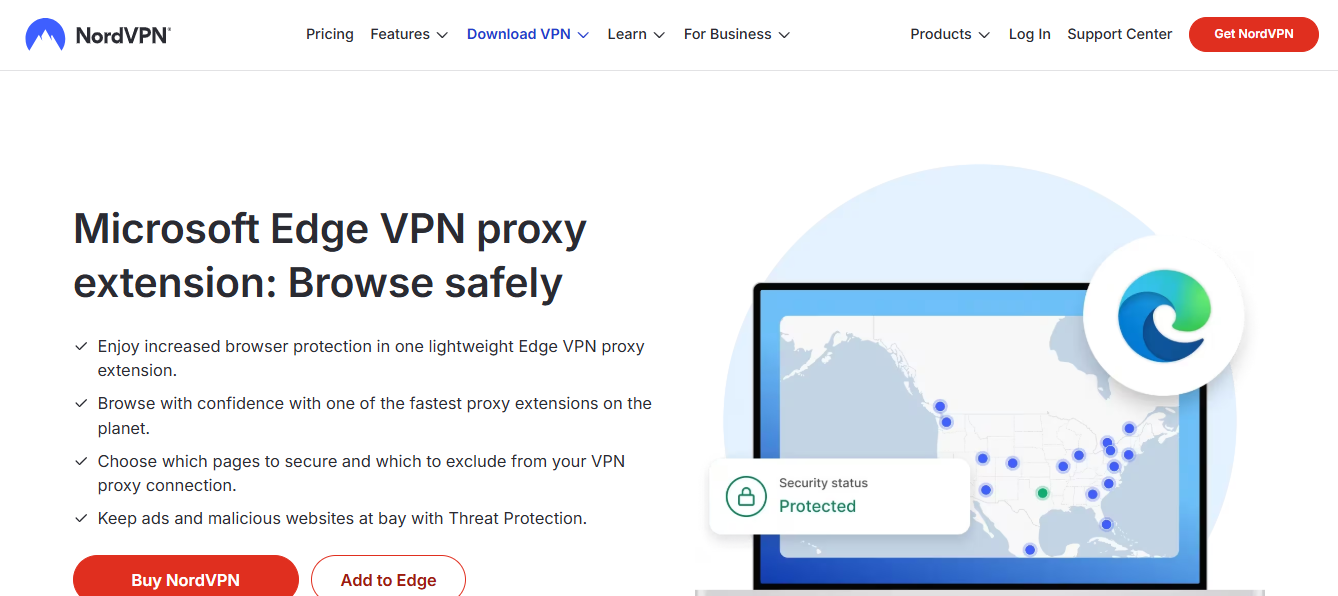
- NordVPN Edge extension: Strong encryption, large server network, fast WireGuard-based protocol, strict no-logs policy, kill switch, DNS leak protection, and reliable access to streaming services. If you’re looking for a balanced option with solid privacy credentials, NordVPN is a solid choice. Pros: excellent streaming support, great multipoint protection, user-friendly. Cons: some servers can be slower during peak hours.
- ExpressVPN Edge extension: Known for reliable performance, broad server coverage, and easy-to-use interface. It’s especially strong for bypassing geo-restrictions and streaming. Pros: consistently strong speeds, excellent customer support. Cons: price tends to be higher than some competitors.
- Surfshark Edge extension: Great value with unlimited device connections, strong privacy features, and good performance. Pros: budget-friendly, strong feature set, clean interface. Cons: occasional variability in speed on certain servers.
- Proton VPN Edge extension: Privacy-forward with a transparent stance and strong security posture. Pros: clear privacy philosophy, good for privacy purists. Cons: network size and speed can be variable on some servers.
- Windscribe Edge extension: Generous free tier, flexible features, and a straightforward setup. Pros: free data allowance, good for casual use. Cons: paid plans needed for higher speeds and more access.
How to install a VPN plugin on Microsoft Edge step-by-step
- Step 1: Open Edge and go to the Edge Add-ons store. Step-by-step: In Edge, click the three-dot menu, select Extensions, then choose Get extensions from Microsoft Edge Add-ons.
- Step 2: Search for the VPN extension you want. Type the name e.g., NordVPN, ExpressVPN, Surfshark and review the extension page for features, permissions, and user ratings.
- Step 3: Install the extension. Click Add to Edge, then confirm the permissions the extension requests. Most extensions will ask for permission to read and change data on the websites you visit.
- Step 4: Sign in and set up. After installation, open the extension from the toolbar, sign in with your provider account, and configure preferred settings like auto-connect, server location, and kill switch.
- Step 5: Configure privacy protections. Turn on DNS leak protection and WebRTC protection if the option is available. If you use a split-tunneling feature, set it up according to your browsing needs.
- Step 6: Test the connection. Visit a site that shows your IP like whatismyip.com and confirm that it reflects the VPN server location. Run a quick WebRTC test to ensure there are no leaks.
- Step 7: Pin the extension for quick access. Pin the VPN extension to your Edge toolbar, so you can connect or disconnect quickly while browsing.
- Step 8: Maintain and update. Periodically check for extension updates, review privacy policy changes, and adjust settings if you upgrade to a different server or plan.
Performance considerations with Edge VPN extensions
- Speed impact: VPN overhead can reduce raw speed a bit, but choosing a modern protocol like WireGuard can minimize this effect. If you’re gaming or doing latency-sensitive tasks, pick a server close to your location and enable auto-connect only when connected to public networks.
- Server selection: The closer the server, generally the better the speed. For streaming, pick servers known to work with your service. Some providers publish streaming-optimized servers that bypass known blocks.
- Browser-only vs system-wide VPN: A browser extension is great for protecting browser traffic, but if you need device-wide encryption for apps outside the browser, pair the Edge extension with a full VPN client or use a provider that offers a system-wide VPN in addition to the Edge extension.
- Battery and resource usage: In most cases, Edge extensions are lightweight, but running multiple VPN connections or a high number of browser tabs can impact performance on older devices. Monitor system performance and disable extensions you don’t need.
Security considerations when using VPN extensions in Edge
- End-to-end vs browser-level protection: Browser-based VPNs primarily protect browser traffic. If you’re concerned about all device traffic including apps, you’ll want a full-device VPN.
- DNS leaks: Ensure the extension provides DNS leak protection to prevent your DNS requests from revealing your real location.
- WebRTC leakage: Some browsers have WebRTC features that can reveal your real IP even when a VPN is in use. Look for a WebRTC block option in the extension.
- Kill switch behavior: A proper kill switch should prevent traffic if the VPN disconnects. In browser extensions, this often applies to browser traffic only, so understand the scope.
- Privacy policy and data handling: Read the extension’s privacy policy. Some free or cheaper extensions collect more data than you’d expect, which can undermine your privacy goals.
- Combination with other privacy tools: If you’re using other privacy tools ad blockers, anti-tracking extensions, make sure there aren’t conflicts that degrade performance or cause leaks.
Free vs paid VPN extensions for Edge Vpn microsoft edge android guide to secure browsing on Android with Edge VPNs and practical setup 2026
- Free extensions: They can be tempting, but they often come with data caps, slower speeds, and limited server options. Some may monetize through ads or data collection. They’re fine for casual use, but they’re not ideal if you rely on privacy and consistency.
- Paid extensions: Expect better performance, more server locations, stronger privacy policies, and premium features like longer kill switch coverage and dedicated streaming servers. If you want reliable privacy and unblocked streaming, paid options are generally worth the investment.
- Hybrid models: Some providers offer a free tier with the option to upgrade. These can be a good way to test a service before buying, but be mindful of the data limits and feature restrictions.
Edge-specific tips for maximizing VPN extension utility
- Use per-site bypass split tunneling for sensitive sites: If you want your banking site to bypass the VPN while keeping other sites protected, use split tunneling to route only certain domains through the VPN.
- Automatically connect on startup: Enable auto-connect so you’re protected as soon as Edge launches, especially when you’re on public or shared networks.
- Use server location wisely: For streaming, pick servers optimized by your VPN provider for speed and reliability. For privacy, choose a server in a country with strong privacy protections and a good no-logs policy.
- Verify IP and DNS after changes: After switching servers or enabling new features, confirm your IP and DNS are not leaking by visiting an IP checker site and a DNS leak test.
- Manage extensions with a clean setup: Only keep extensions you actively use. An overloaded extension list can slow down Edge and complicate troubleshooting.
Troubleshooting common Edge VPN extension issues
- Extension won’t connect: Try toggling auto-connect off and on, switch servers, or restart Edge. Check for conflicting extensions that might block VPN traffic.
- DNS leaks despite protection: Ensure DNS leak protection is enabled in the extension. If not, check your system DNS settings or use a provider that bundles DNS protection with its Edge extension.
- Streaming still blocked: Switch to a different server or use a streaming-friendly server list provided by your VPN provider. Some services actively block VPN IPs. rotating servers can help.
- Browser performance slows down: Disable other heavy extensions temporarily to identify conflicts. Clear cache and update Edge, then reinstall the VPN extension if needed.
- Disconnects on mobile or desktop: Ensure the companion mobile/desktop app is up to date if your extension relies on it. Check for network issues, or try a different network.
Edge vs system VPN: which should you use?
- Edge VPN extension advantages: Quick to install, easy on resources, protects only browser traffic, great for light privacy, geo-unblocking, and safe browsing on public Wi‑Fi through the browser.
- Full-device VPN advantages: Protects all traffic from the device, including apps, background processes, and other browsers. Essential if you’re concerned about non-browser traffic, torrenting, or using app-based services.
- Best approach: For many users, a combination works well: use a browser extension for everyday browsing and a full-device VPN when you need broader protection or want to secure all apps.
Real-world use cases and scenarios
- Remote worker on public Wi‑Fi: Use Edge VPN extension to secure browser data on sensitive web apps, emails, and collaboration tools. enable auto-connect on startup for convenience.
- Traveler streaming: Connect to servers in your home country or country with your streaming service’s library. switch servers if one is blocked or slow.
- Privacy-conscious browsing: Use a no-logs extension with strong encryption. enable DNS and WebRTC protections, and consider a per-site split tunneling strategy for sensitive sites.
Frequently Asked Questions Vpn extension edge free guide for browsers on Windows macOS Android iOS 2026: setup, performance, verdict
Frequently Asked Questions
Is there a VPN plugin for Microsoft Edge?
Yes. Edge supports Chromium-based VPN extensions that you can install from the Microsoft Edge Add-ons store or your chosen provider. These extensions secure browser traffic and often offer features like kill switches, DNS leak protection, and per-site tunneling.
How do I install a VPN extension in Edge?
Open Edge, go to Extensions > Get extensions from Microsoft Edge Add-ons, search for the VPN extension you want NordVPN, ExpressVPN, Surfshark, etc., click Add to Edge, grant the requested permissions, sign in, and configure settings like auto-connect and server location.
Can I use Edge without a VPN extension?
Absolutely. A VPN extension is optional. If you don’t need the extra privacy layer for browser traffic, you can browse normally. However, a VPN extension can be a simple privacy upgrade for everyday browsing, especially on shared networks.
Will a VPN extension protect all my internet traffic?
Most Edge VPN extensions protect only the traffic that goes through the browser. If you want device-wide protection, you’ll need a full VPN client on your device or a provider that offers both a browser extension and a system-wide VPN.
Is it safe to use a free VPN extension in Edge?
Free VPN extensions exist, but they often come with limitations and privacy trade-offs. They may have data caps, slower speeds, or collect more data. If privacy and reliable performance matter, a paid extension is usually a better choice. What is edge vpn app and how edge computing reshapes private networks, latency, and security for modern browsing 2026
Do VPN extensions in Edge slow down my browsing?
There can be a small speed impact due to encryption and routing through a VPN server. Choosing servers near you and using efficient protocols like WireGuard can minimize the slowdown.
Can I use Edge VPN extensions for streaming?
Yes, many VPN extensions for Edge are optimized for streaming. Some servers are specifically labeled for streaming to help bypass geo-restrictions. If a service detects VPNs, you may need to switch servers or contact support.
How many devices can use one VPN account with Edge extensions?
That depends on your VPN provider. Most providers offer multiple simultaneous connections across devices. Check your plan details for the exact limit and how to manage connections.
What if Edge won’t install my VPN extension?
First, ensure your Edge browser is up to date. Disable conflicting extensions that might block the VPN, clear cache, and restart Edge. If the issue persists, consult the provider’s support or reinstall the extension.
Do I need to disable WebRTC to avoid IP leaks when using Edge VPN extensions?
WebRTC can sometimes reveal your real IP even when a VPN is active. Many VPN extensions include WebRTC protection. if yours doesn’t, you may want to adjust browser settings or install a privacy-focused extension that blocks WebRTC leaks. What is ghost vpn and how it works in 2026: benefits, risks, and best ghost vpn alternatives
Are VPN extensions legal in most countries?
In most places, using a VPN extension is legal for legitimate privacy and security purposes. However, a few countries impose restrictions or require disclosures on VPN usage. Always follow local laws and service terms.
How do I test for DNS leaks with an Edge VPN extension?
After connecting to a VPN server, visit a DNS leak test site for example, dnsleaktest.com and check whether the DNS queries appear to originate from the VPN provider’s servers. If you see your real DNS, re-check DNS protections in the extension and consider switching servers or enabling system-wide protection if available.
Can I run more than one VPN extension in Edge?
Running multiple VPN extensions simultaneously can cause conflicts or block traffic. Choose one trusted extension that covers your needs, or disable others to troubleshoot.
What’s the difference between a strict no-logs policy and a “monthly privacy report”?
A strict no-logs policy means the provider claims not to store user activity data. A monthly privacy report is a transparency measure that shows what data is collected and how it’s used. Look for providers that publish regular, verifiable privacy information.
How do I remove a VPN extension from Edge?
In Edge, go to Extensions, locate the VPN extension, click Remove, and confirm. It’s a quick way to troubleshoot or switch to a different provider. Zenvpn chrome extension 2026
Can I trust the data collected by VPN extensions?
Trust depends on the provider and their privacy policy. Reputable vendors publish clear privacy statements and provide details about data collection, retention, and how it’s used. Always read the policy before enabling any extension.
Useful URLs and Resources
- Apple Website - apple.com
- Microsoft Edge Add-ons Store - microsoft.com/en-us/edge/addons
- NordVPN - nordvpn.com
- ExpressVPN - expressvpn.com
- Surfshark - surfshark.com
- Proton VPN - protonvpn.com
- Windscribe - windscribe.com
- WhatIsMyIP - whatismyip.com
- DNS Leak Test - dnsleaktest.com
- WebRTC Leak Test - browserleaks.com/webrtc
- PrivacyTools.io VPN recommendations - privacytools.io/providers/vpn
A quick takeaway
- If you mainly browse in Edge and want convenience with decent protection, a well-reviewed VPN extension can be a solid upgrade. Prioritize privacy policy, DNS/WebRTC protections, and a simple, reliable interface. For broader device coverage or more flexible streaming, pair a browser extension with a full-device VPN.
References and further reading
- Edge extension architecture and permissions overview for Chromium-based browsers
- VPN protocol comparison WireGuard vs OpenVPN and other options
- Best practices for browser-based privacy and security in 2025
- How to verify VPN performance and reliability for streaming and gaming
- Public Wi-Fi safety tips and how VPNs fit into a layered security model
Note: This guide is intended for educational purposes and reflects general best practices for VPN extensions in Microsoft Edge as of 2025. Always check the latest provider documentation for any changes in features or limitations. Windscribe extensions 2026
V2vpn 使用指南与评测:在中国地区安全上网与隐私保护的完整攻略